8 Biggest GMAT Study Mistakes That Kill Your Score
Most lost points come from a handful of study habits, not a lack of effort. Here are the eight mistakes that show up most often, and what to do about each one.
The GMAT Rewards Pattern Recognition
The GMAT is largely a pattern recognition exam. Every question draws from a limited set of underlying structures, and the test rewards recognizing them quickly under time pressure. A lot of study time gets spent in ways that do not build this skill, even when the effort is genuine.
8 Mistakes That Cost You Points
Each row covers a habit that quietly caps a lot of test-takers' scores, along with the fix.
 GMAT Panda GMAT Panda | |
|---|---|
| Mistake | Why it costs you points |
Studying theory too long | Until you see a concept inside a real question, it is hard to know which parts of it actually matter on the exam. Cap theory at roughly one quarter to one third of your study time and spend the rest on questions, debrief, and revision. |
Practicing only hard questions | The scoring algorithm penalizes a wrong easy question heavily. Skipping easy and medium questions in practice also means missing the shortcuts that keep them fast. Mix difficulty levels in every batch. |
Thinking a non-math background is a disadvantage | GMAT Quant rewards breaking a problem into simple steps, not advanced math training. Test-takers comfortable with higher-level math often overcomplicate questions that have a short, simple solution. The free from-scratch course is built for that starting point. |
Using mock exams as regular practice | Official mocks are a finite resource. Save them to check your current level or confirm readiness close to test day. Build pace and accuracy with regular questions in timed batches instead. |
Never practicing under time pressure | Solving a question in 10 minutes untimed and solving it in 2 minutes under pressure draw on different skills. Timed practice trains the one test day actually measures. |
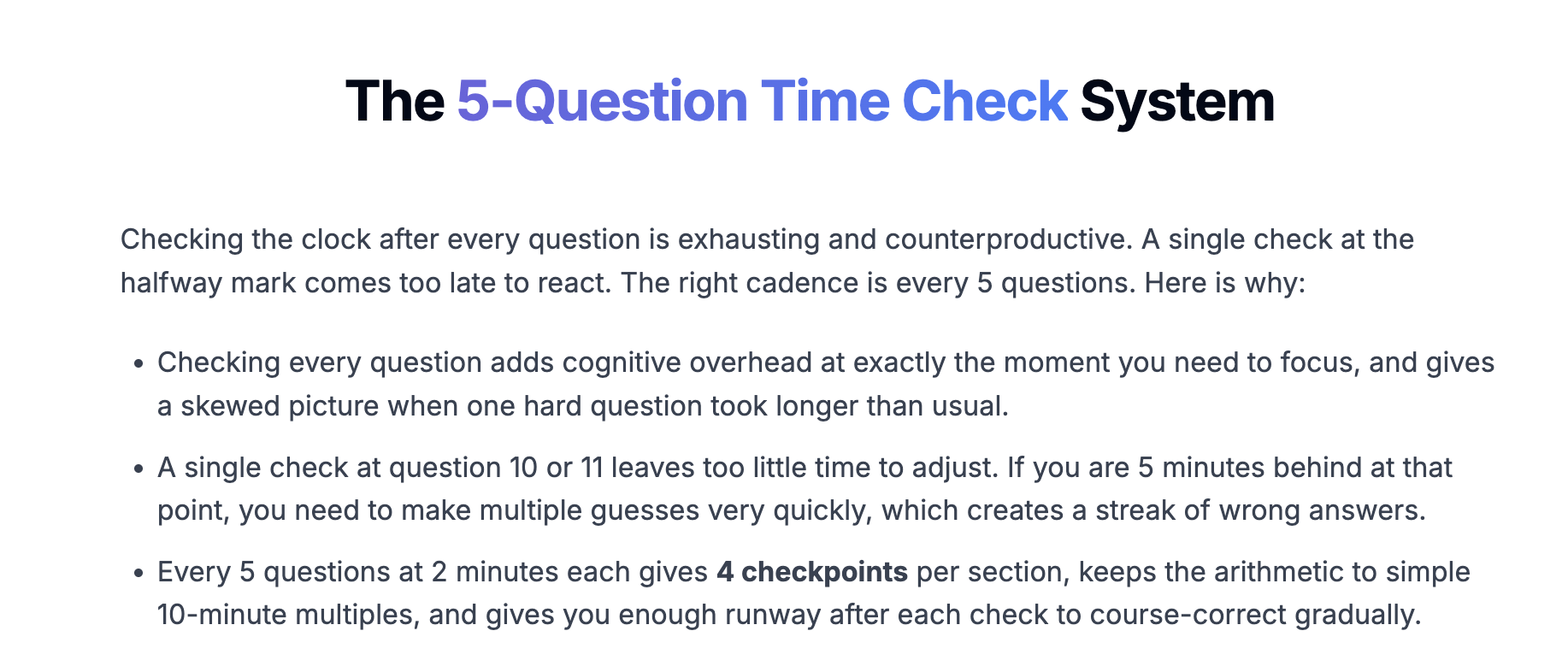
Timing questions one at a time | An average pace of 2 minutes per question is not the same as spending exactly 2 minutes on every question. Some genuinely need 3, and that time comes from others solved in 1. Practice in batches and check the clock every 5 questions. |
Reaching for complicated math | Every question is built to solve in about 2 minutes, so no single calculation should take more than 30 seconds of times-tables-level arithmetic. A method that feels heavy or slow usually means a simpler path exists. |
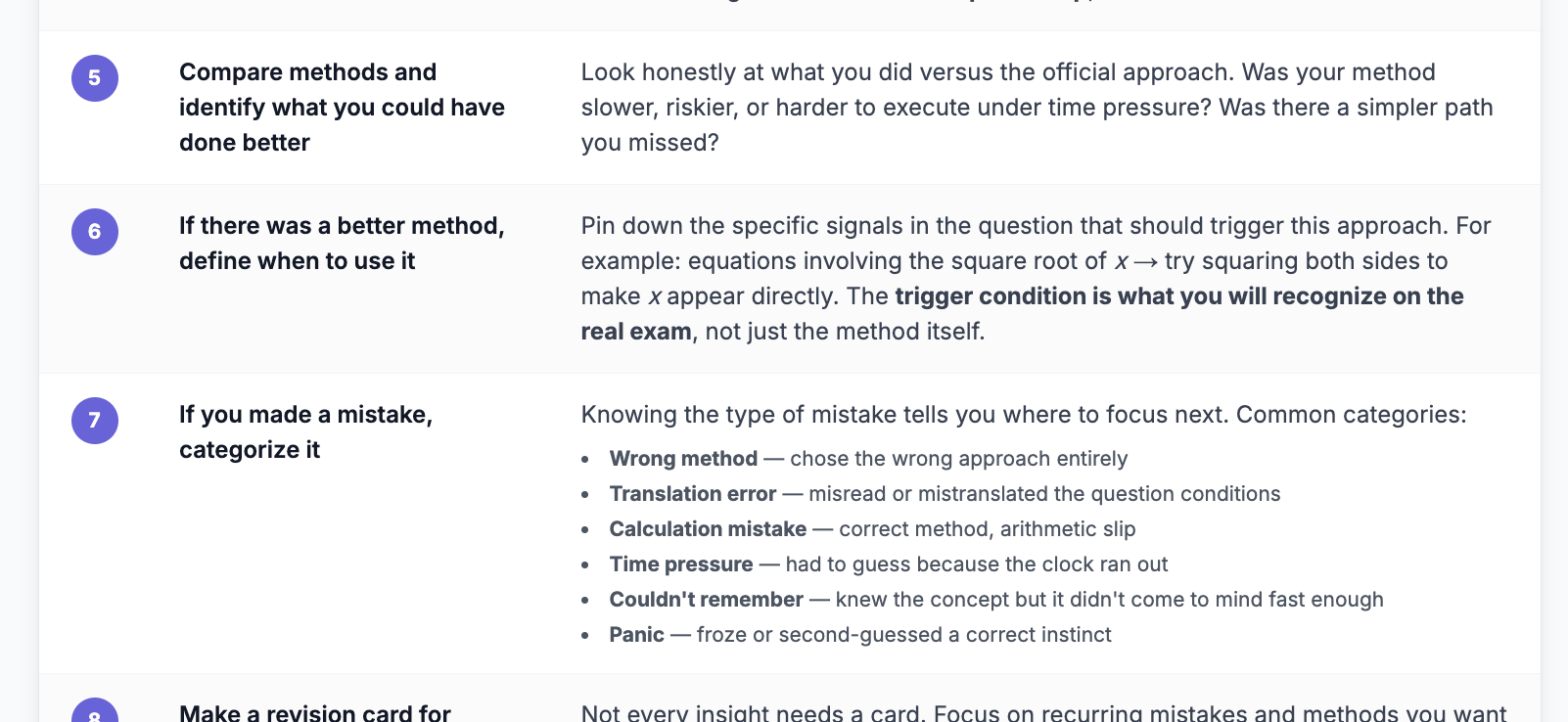
Chasing quantity over review quality | Volume builds exposure to patterns, but review is where the gains come from. Spend close to as much time debriefing a batch as you spent solving it, and prioritize well-made questions over doing more at lower quality. |
Where to Start
Look at your last few study sessions and check them against the table above. Most test-takers recognize two or three of these habits right away, and fixing those first usually produces the biggest jump in score.
If pacing is the issue, our guide on GMAT time management covers pace checks and educated guessing in detail, and how to go faster in GMAT Quant breaks down the strategy shortcuts that keep calculations short.
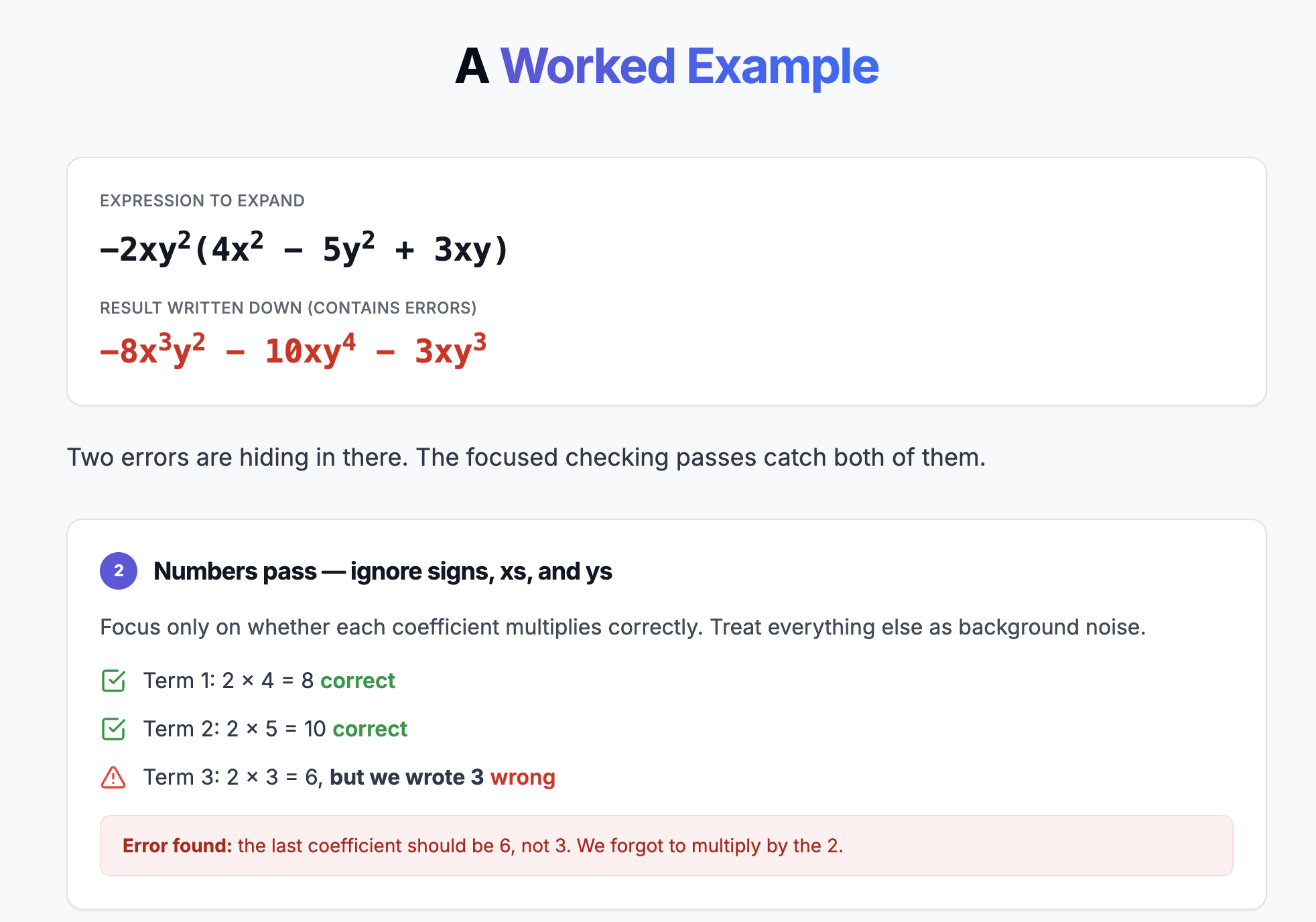
If mocks are running low or review feels rushed, see our guides on how to use official GMAT mock exams and how to do a proper GMAT question debrief. For calculation slips specifically, how to avoid silly mistakes in GMAT Quant covers the checking process step by step.
Our full GMAT preparation guide covers how to structure a study plan around all of these areas from the start.
Related reading
Continue with these GMAT Panda articles.
Avoid these mistakes with a coach that catches them
GMAT Panda walks you through the right approach for each question, runs timed drills with pace checks, and builds revision cards from the mistakes you actually make.