Managing Prep Stress and Test Anxiety
How to stay steady across months of study and keep your head clear on exam day, without pretending the GMAT is easy or that stress disappears on its own.
Pace, Planning, and a Long Horizon
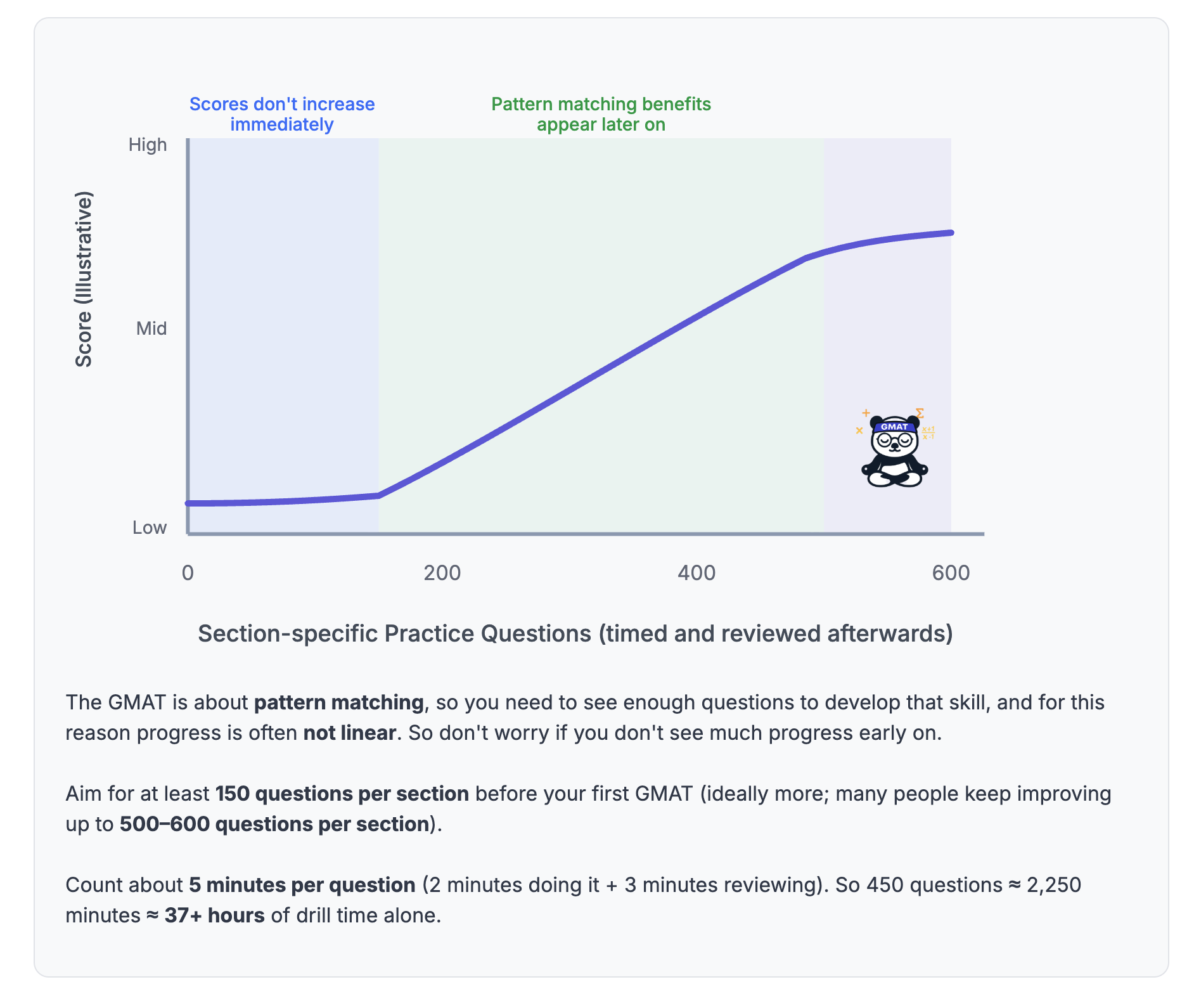
GMAT prep extends over months. Consistency matters more than occasional all-day pushes. Regular shorter sessions almost always beat cramming five hours once a month: skills fade when study gaps are huge, and marathon blocks invite burnout.
Build a realistic plan upfront. Our how to prepare for the GMAT guide walks through study hours, resources, mocks, and structured revision ideas. Leave room mentally for the possibility of a retake if you need one. Many strong applicants improve on a second attempt once they know how the exam feels under real conditions.
Treat small windows as real prep time. Ten or twenty focused minutes during a commute, coffee break, or lunch adds up fast and keeps patterns familiar. Frequency builds automaticity when it matters most.
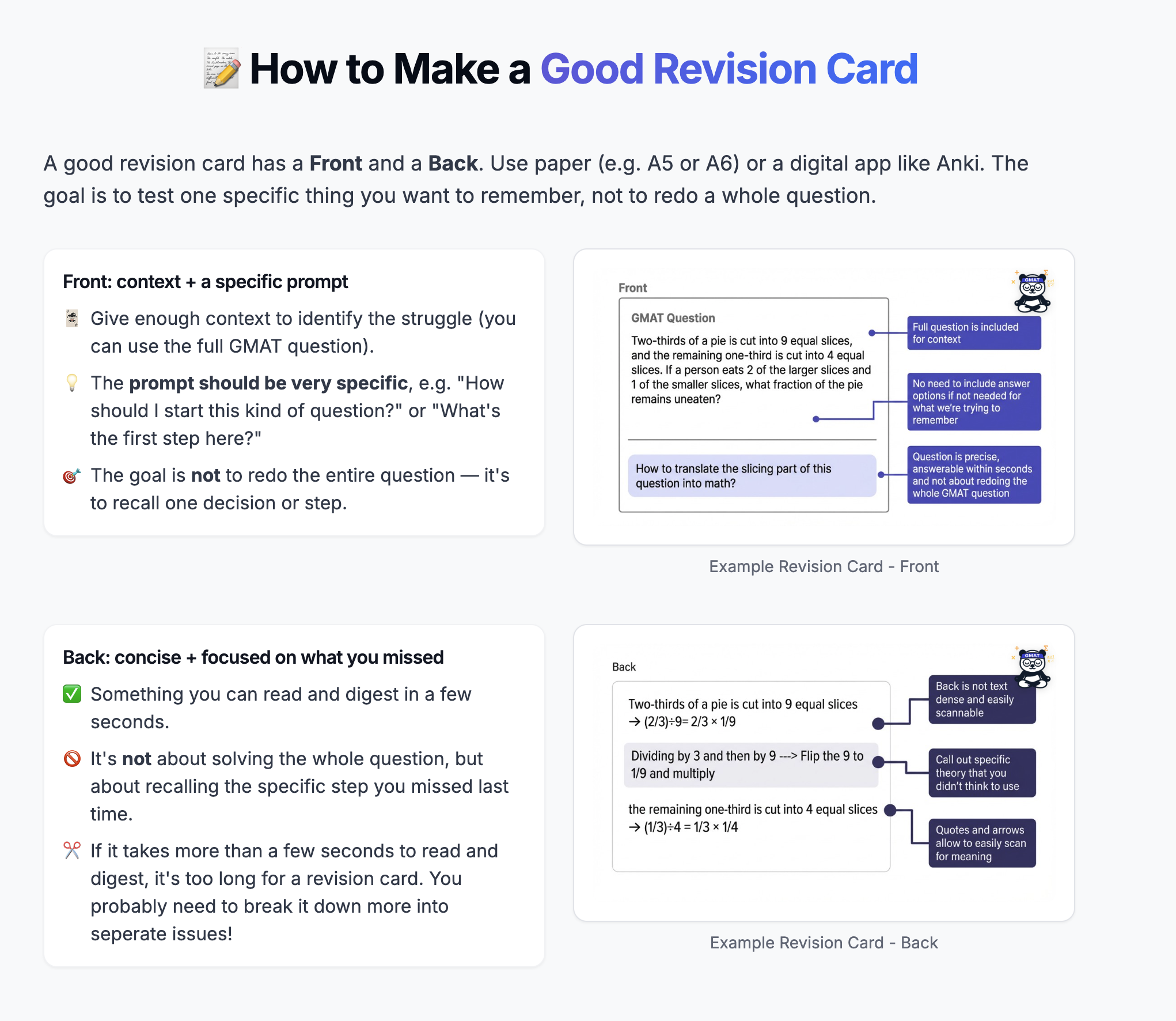
Revision cards also help you practice under time pressure: quick prompts and short timers push retrieval speed so decisions feel less fragile when the clock is running. Our article on how revision cards can take you from good to great on the GMAT goes into how that maps onto real exam pacing.
Beyond Studying (What Still Moves Your Score)
Sleep, light, movement, relationships, and food shape focus and emotional regulation. None of these replace practice questions; they keep your brain usable while you work.
 GMAT Panda GMAT Panda | ||
|---|---|---|
| Habit | Recommended sources | |
Morning sunlight Get natural light soon after waking (within 2 hours). This helps anchor your body clock. Sunlight with sunglasses or behind a glass window doesn't count since they filter out the effects that help! | Huberman Lab: Using light for health Andrew Huberman explains how early daylight exposure anchors circadian rhythm and improves sleep, mood, and alertness. | |
Stay connected Do not cancel every social plan. Relationships buffer stress when prep is heavy. | Katelyn Jetelina: Social connection and health (Your Local Epidemiologist) Explains how social relationships buffer stress and improve overall health outcomes. | |
Cold showers This helps boost dopamine and regulates your immune system which in turn reduces anxiety. A good way to get into this is to end a warm shower with 30 to 90 seconds of cold water, or build up gradually. | Andrew Huberman: Using deliberate cold exposure for health and performance Covers how controlled cold exposure affects alertness, mood, and stress physiology, plus practical protocols for cold showers and ice baths. | |
Practice the psychological sigh before the exam A double inhale through the nose, then long exhale through the mouth. It's been proven to reduce stress and anxiety. | Andrew Huberman: Physiological sigh for stress relief (tools for stress and anxiety) Describes a breathing pattern shown to rapidly reduce stress and anxiety via the nervous system. | |
8+ hours sleep Sleep in a cool room, reduce noise and light (with mask and earplugs), try to go to bed at the same time every night, and limit screens and meals late at night (especially carbs). | Matthew Walker: Sleep and learning (UC Berkeley, Why We Sleep) Shows that sleep is critical for memory consolidation and cognitive performance, directly relevant to exam prep. | |
Exercise Movement supports mood and stress regulation. Walking counts, so get steps in even if you don't like cardio! | Rhonda Patrick: Exercise and brain health (FoundMyFitness) Covers how physical activity improves mood, stress regulation, and cognitive function. | |
One GMAT-free day weekly Your brain needs a regular rest from studying. Don't take too many days off or you'll lose your study rhythm. | Peter Attia: The importance of recovery (The Drive) Emphasizes that recovery is essential for performance, not a waste of time. | |
Eat and drink deliberately Reduce sugar and processed foods where you can. Non natural ingredients trigger your immune system and this amplifies stress. Some caffeine can help; too much disrupts sleep. It's hard to adapt but your cravings will slowly subside over time! | David Sinclair: Nutrition, metabolism, and longevity Discusses how diet affects metabolism, inflammation, and long-term brain health. | |
Managing Test Day Anxiety
Book a time that matches how you study
If afternoons are when you normally drill, a first-thing appointment can feel unfamiliar before you open the first question. Align appointment time with the rhythm you trained on when it is realistic.
Choose the format that fits your stress profile
Test centers can mean travel, parking, security procedures, and a new room. Online exams can mean unstable internet, noisy neighbors or flatmates, or technical issues.
Tradeoffs vary by person. Our GMAT Focus Exam FAQ compares online and in-person logistics in detail.
Pick a section order that settles you in
Starting with your strongest section can quiet early jitters for some people. Others prefer tackling a hard section first while they are freshest. Either way, decide deliberately; the GMAT Focus Section Order Guide walks through how the three-section order works and what to weigh.
Rehearse exam conditions before the exam
Full mocks matter, but so do shorter timed blocks with the same scratch setup, pacing rules, and guess strategy you intend to use live. This avoids any change in behavior on test day, which can trigger anxiety.
Use the physiological sigh during breaks and tough moments
Double inhale through the nose, then long exhale through the mouth. Practice it in mocks so it is automatic on test day (see the Huberman Lab link in the table above).
Be ready early
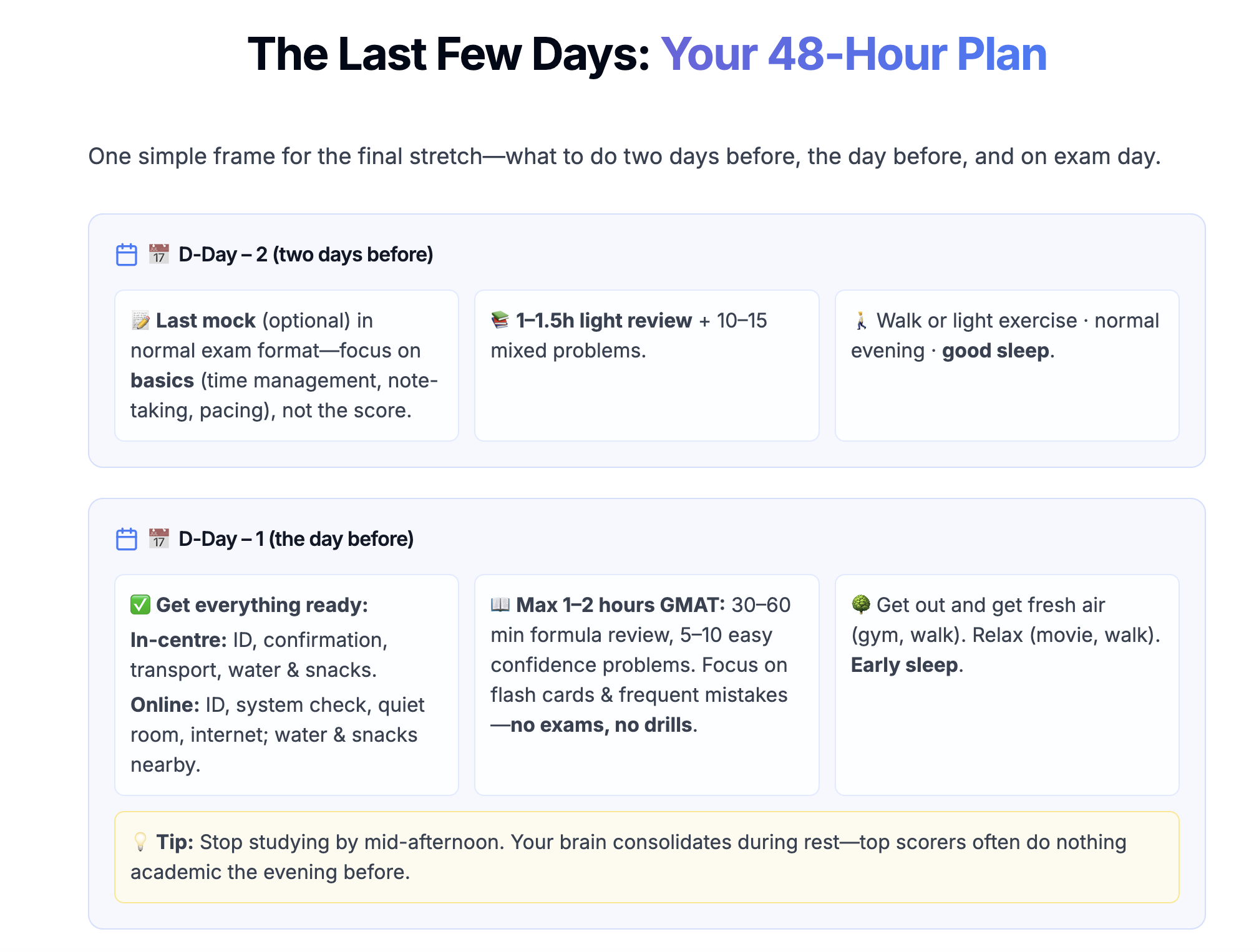
Finish room setup, ID checks, software tests, and route planning before exam morning. The last 48 hours checklist covers logistics for both formats.
Plan for outcomes you do not want
Negative visualization sounds grim, but it lowers surprises. Picture a score below your target, then write what you would do next: retake in a defined number of weeks, add timed sets or error-log reviews, widen school lists, or pursue programs that fit your profile without a test requirement.
Knowing your fallback route ahead of time keeps panic from hijacking judgment mid-test. Understanding scoring ranges also helps interpret results calmly; see how GMAT scoring works.
Prep with structure and support
Timed practice, revision that adapts to what you miss, and clear tactics when time is tight.