What Top Business Schools Look for in Applicants
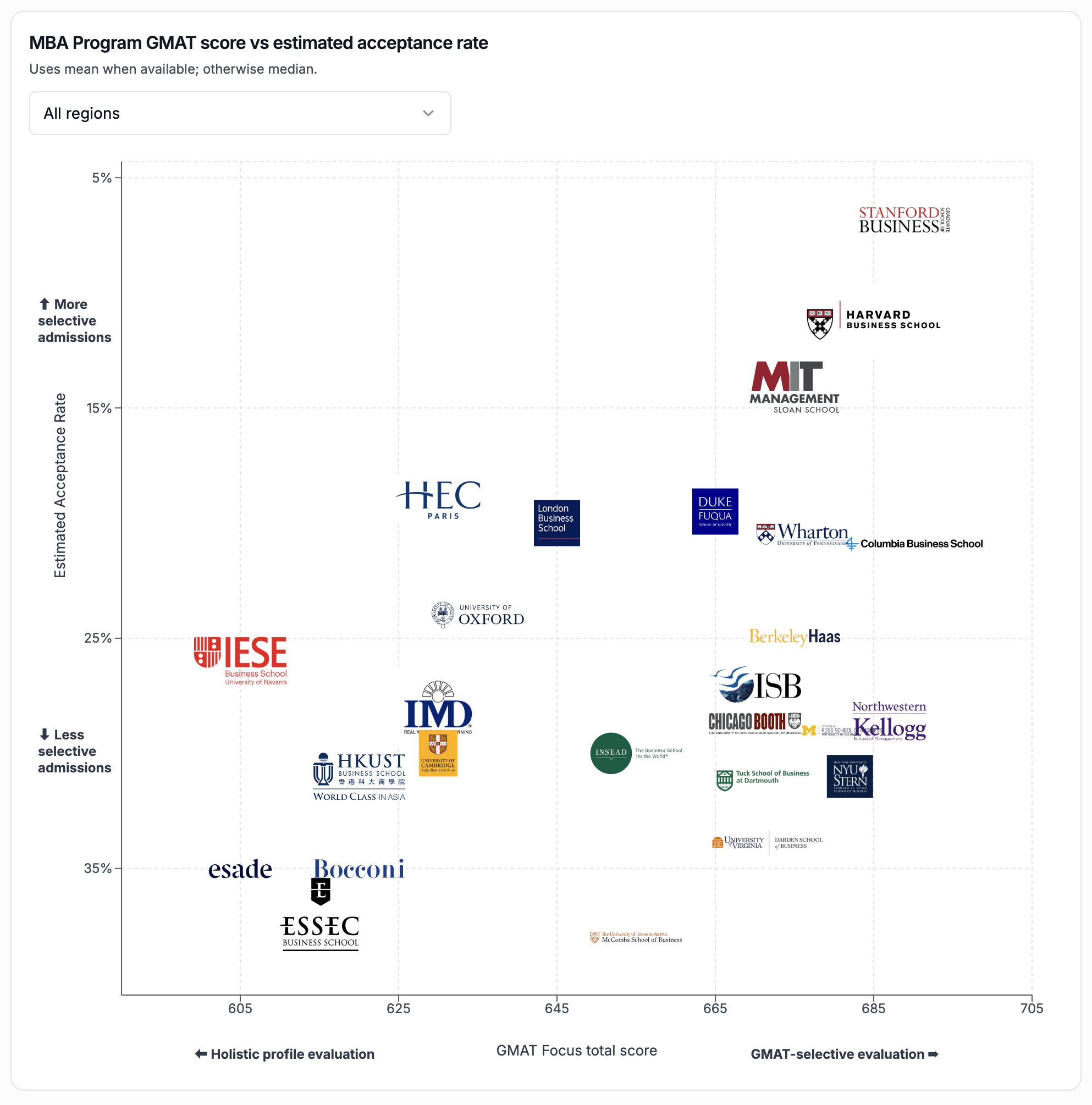
Admissions criteria differ significantly across leading programs. The chart plots nine schools across two dimensions: how much each rewards values-led thinking vs. analytical pragmatism, and how much it favors outward ambition vs. inward self-awareness.
Published
By Graeme O'Connor, Founder of GMAT Panda. 99th percentile GMAT scorer, London Business School MBA alumnus (Dean's List, former Student Ambassador), 10+ years of GMAT tutoring and admissions consulting for top US and European schools.
This study was researched and compiled by Claude Cowork in May 2026. School positions on the chart were derived through qualitative analysis of the emphasis and framing of each school's admissions language, not keyword counting. Two schools may use the word "collaborative" but be positioned differently based on how central that trait is to their overall framing.
Important caveats:
- Admissions pages are updated annually and some language may have changed since the research date.
- Positions on each axis represent judgment calls and should be treated as approximate clusters rather than precise scores.
- What schools say they look for and what admissions decisions actually reward are not necessarily the same; this study captures stated criteria only.
School culture and admissions positioning
Idealism vs. pragmatism and outward ambition vs. inward self-awareness
Methodology and sources
This study was researched and compiled by Claude Cowork in May 2026. Data was gathered from the following official admissions pages. School positions on the chart were derived through qualitative analysis of the emphasis and framing of each school's admissions language, not keyword counting. Two schools may use the word "collaborative" but be positioned differently based on how central that trait is to their overall framing.
Important caveats:
- Admissions pages are updated annually and some language may have changed since the research date.
- Positions on each axis represent judgment calls and should be treated as approximate clusters rather than precise scores.
- What schools say they look for and what admissions decisions actually reward are not necessarily the same; this study captures stated criteria only.
Official admissions pages
Related reading
Continue with these GMAT Panda articles.

.png)
Still building your GMAT score?
A strong GMAT score signals readiness to every school on this chart. GMAT Panda gives you a personalized study plan, timed drills, and clear tactics to reach your target.