Official GMAT Mock Exams: Everything You Need to Know
GMAC sells a fixed set of official mock exams, and how you schedule them through your prep matters more than how many you buy. Here is how many exist, what they cost, and how to get the most useful score estimate out of each one.
Official GMAT Mocks at a Glance
Official Starter Kit
Exams included: Exams 1 & 2
Price: Free
Question pool & difficulty: Exams 1 & 2 share the same larger pool, often felt as easier
Official Practice Exams 3 & 4
Exams included: Exams 3 & 4
Price: $59.99
Question pool & difficulty: Smaller pool, closer to test day
Official Practice Exam 5
Exams included: Exam 5
Price: $34.99
Question pool & difficulty: Smaller pool, closer to test day
Official Practice Exam 6
Exams included: Exam 6
Price: $34.99
Question pool & difficulty: Smaller pool, closer to test day
Official Practice Exams 3-6 bundle
Exams included: Exams 3, 4, 5 & 6
Price: $107.99 (list $129.97)
Question pool & difficulty: See above
GMAT Panda | |||
|---|---|---|---|
| Bundle | Exams included | Price (at publishing) | Question pool & difficulty |
| Official Starter Kit | Exams 1 & 2 | Free | Exams 1 & 2 share the same larger pool, often felt as easier |
| Official Practice Exams 3 & 4 | Exams 3 & 4 | $59.99 | Smaller pool, closer to test day |
| Official Practice Exam 5 | Exam 5 | $34.99 | Smaller pool, closer to test day |
| Official Practice Exam 6 | Exam 6 | $34.99 | Smaller pool, closer to test day |
| Official Practice Exams 3-6 bundle | Exams 3, 4, 5 & 6 | $107.99 (list price $129.97) | See above |
Prices as of July 2026. GMAC adjusts pricing periodically and it can vary by region, so confirm the current cost on mba.com before you buy.
How Many Official Mocks Are There, and Where Do You Get Them?
GMAC, the organization behind the GMAT, sells six official mock exams (numbered 1 through 6) through the GMAT Official Practice Exams store on mba.com. Exams 1 and 2 come bundled for free in the GMAT Official Starter Kit. Exams 3 and 4 are sold together as a pair for $59.99, Exams 5 and 6 are each sold individually for $34.99, and all four (Exams 3 through 6) can also be purchased together for $107.99, cheaper than buying them separately at $129.97.
Each mock draws its questions from its own dedicated question pool, and picks among them adaptively based on how you perform, the same computer-adaptive approach used on the real exam. For more detail on how that adaptive selection works, see how GMAT scoring works.
How to Use Official Mocks
You can take each exam twice before questions repeat
According to GMAC, each official mock can be reset and retaken once without seeing repeated questions, since the second attempt pulls a different mix from that exam's own question pool. That effectively gives you twelve attempts across the six exams.
Treat mocks as a diagnostic, not a pacing drill
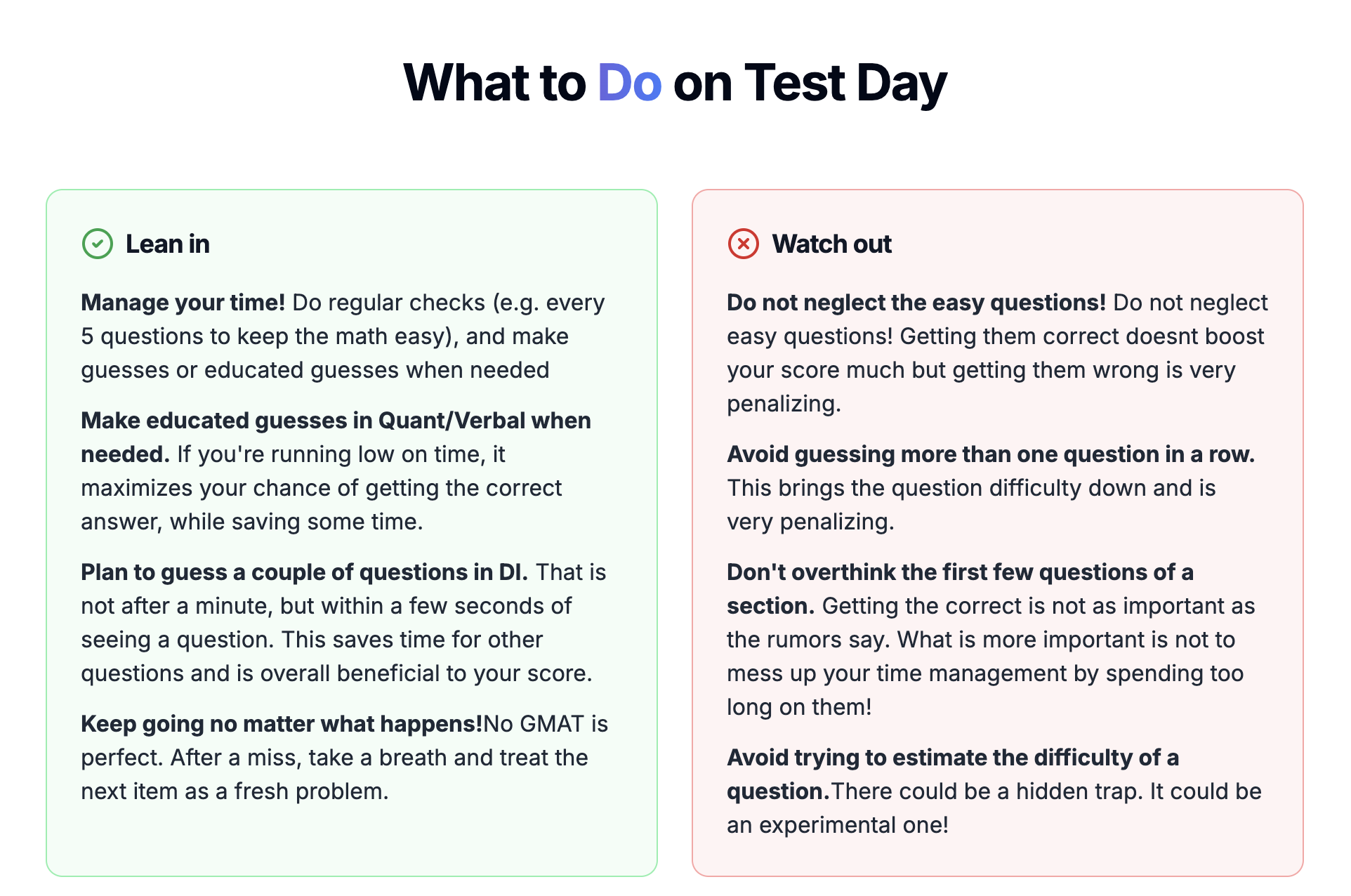
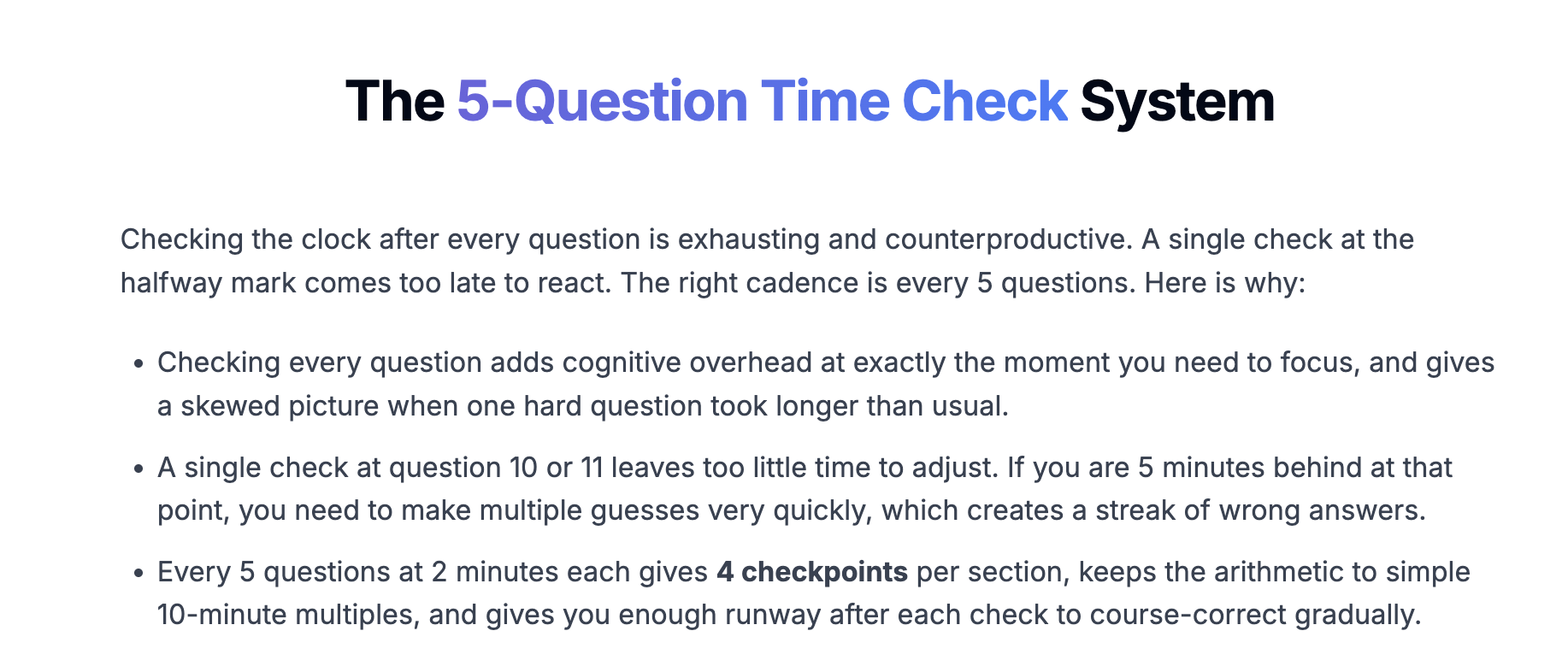
A mock is best used as an estimate of where your level currently sits. It is a limited resource with no detailed pacing debrief built in, so it is a poor tool for building time-pressure skills. A better way to train pacing is running normal practice questions in timed batches, a fixed number of questions in a fixed window, finished without peeking at solutions until the batch ends. See GMAT Time Management for how to structure that practice.
A typical schedule: one at the start, one or two before each attempt
Take one mock near the start of your prep, before much studying, to set a baseline. From there, bring in one or two more mocks before each real exam attempt to get a fresh estimate of your level, rather than spending them all early.
How Representative Are the Different Mocks?
GMAC's official position is that all six mock exams draw from a calibrated pool at the same difficulty and score scale. In practice, test takers report a more mixed picture, and a few patterns come up often enough to be worth knowing before you sit one.
Question pools differ in size
Exams 1 and 2 draw from the exact same, larger question pool, which is one reason they are often felt as easier. Exams 3 through 6 pull from tighter, separate pools with different question compositions, and Exams 3 & 4 draw from a different pool than Exams 5 & 6.
Perceived difficulty varies by exam
Test takers commonly describe Exams 3 through 6 as harder than Exams 1 and 2, and many see them as more representative of the actual exam.
Predictive accuracy for test day holds up well
For most takers, their score will land close to their mock average on the real exam, often within about 20 points across Exams 3 through 6. If a big drop happens, it's usually due to exam anxiety or that people have taken the mocks too many times.
The practical takeaway: treat Exams 3 through 6 as the closest simulation of test day, since they draw from the more recently calibrated pools. Your average across the last two or three official mocks is a more reliable estimate than any single score, and a modest swing in either direction is normal rather than a sign your prep is off track.
Do Not Expect Your Score to Always Go Up
Mock scores move around for reasons that have little to do with your underlying ability. How you feel on the day, which topics happen to come up, and how you perform in the early part of a section all play a role, since the adaptive algorithm uses your early answers in a section to set the difficulty of what comes next.
A lower score on a mock does not necessarily mean you have regressed. Meaningful score movement generally requires real practice volume between mocks, typically a few hundred questions across sections, not just another mock attempt. See How Many GMAT Questions Should I Be Doing? for guidance on volume between mocks.
How you feel on exam day affects your score, independent of your actual level.
Which topics come up varies mock to mock and shifts the difficulty you face.
Early performance in a section sets the difficulty band for the rest of that section.
Frequently Asked Questions
Are official GMAT mock exams accurate?
Official mocks are the most accurate practice score you can get. GMAC builds them from real, retired GMAT questions and runs them on the same adaptive algorithm used on test day. Third-party mocks can still be useful for extra practice, but they cannot fully replicate GMAC's algorithm or item difficulty.
Can I take the same official mock exam twice?
Yes. Each official mock exam can be taken twice before you start seeing repeat questions, since it draws from its own dedicated question pool. A reset on the second attempt pulls a different mix of questions from that same pool.
Should I buy all six official mock exams right away?
Not necessarily. Spread them out across your prep instead of front-loading them. Start with one free mock for a baseline, then bring in the rest one or two at a time as you get closer to test day.
Why did my mock score drop even though I have been studying?
A single mock score reflects how you performed on that particular set of questions on that particular day, including which topics came up and how the first few questions in each section went. One lower score is not proof of regression. Look at the trend across several mocks and your practice accuracy, not any single result.
Do official mock exams count toward my GMAT attempt limit?
No. Official mock exams are separate from the real GMAT. They do not count toward the limit of 5 attempts in a rolling 12-month period or the lifetime maximum of 8 attempts.
When should I take my last mock before the real exam?
A few days to a week before your appointment works well for most candidates. That leaves enough time to review what came up without cramming new content in the final 48 hours, when rest and a light review matter more than new practice.
Are all six official mock exams equally difficult?
GMAC's official position is that all six draw from a calibrated pool at the same difficulty and score scale. In practice, test takers commonly describe Exams 3 through 6 as harder than Exams 1 and 2, partly because Exams 1 and 2 share the same larger, more familiar question pool.
Why do Exams 1 and 2 feel easier than the others?
Exams 1 and 2 draw from the exact same, larger question pool, while Exams 3 through 6 pull from tighter, separate pools. That shared, larger pool is one reason Exams 1 and 2 are often felt as easier.
Which official mock exam is closest to the real GMAT?
Exams 3 through 6 are generally the closest simulation of test day, since they draw from smaller, more recently calibrated pools. Many test takers land within about 20 points of their mock average on Exams 3 through 6 when they sit the real exam.
Related reading
Continue with these GMAT Panda articles.
Practice with built-in pacing feedback
GMAT Panda lets you run timed practice batches and get feedback on your pacing between mocks, so each official mock you spend gives you a cleaner read on your level.