GMAT Focus specialized masters score ranges vs acceptance rate
Compare score ranges, means, medians, and estimated acceptance rates across a curated set of MiM, MiF, and US finance masters programs. Use the charts to benchmark your score, spot category differences, and build a smarter target list.
Published
By Graeme O'Connor, Founder of GMAT Panda. 99th percentile GMAT scorer, London Business School MBA alumnus (Dean's List, former Student Ambassador), 10+ years of GMAT tutoring and admissions consulting for top US and European schools.
This page is directional, designed for comparison and planning. Score ranges and acceptance rates should be verified against each program's official materials.
GMAT matters, but it is only one part of the file. Programs also care about academic performance, quantitative preparation, internships, prior coursework, and how well your profile matches the specific style of degree you are targeting.
Specialized masters: GMAT score vs estimated acceptance rate
Specialized masters: GMAT score vs estimated acceptance rate
Uses mean when available; otherwise median. Shaded regions highlight MiM and MiF clusters for the current filters.
At a Glance: What Affects Your Score
The chart above uses GMAT Focus total scores (205–805) and program-reported ranges where available. The full scoring recipe is private, but here's what we know. GMAT scoring.
Impacts your score
- Whether each item is correct or incorrect, based on your final (if you changed it) selected answer.
- The difficulty of the questions you answered
- Unanswered questions that effectively cap your score.
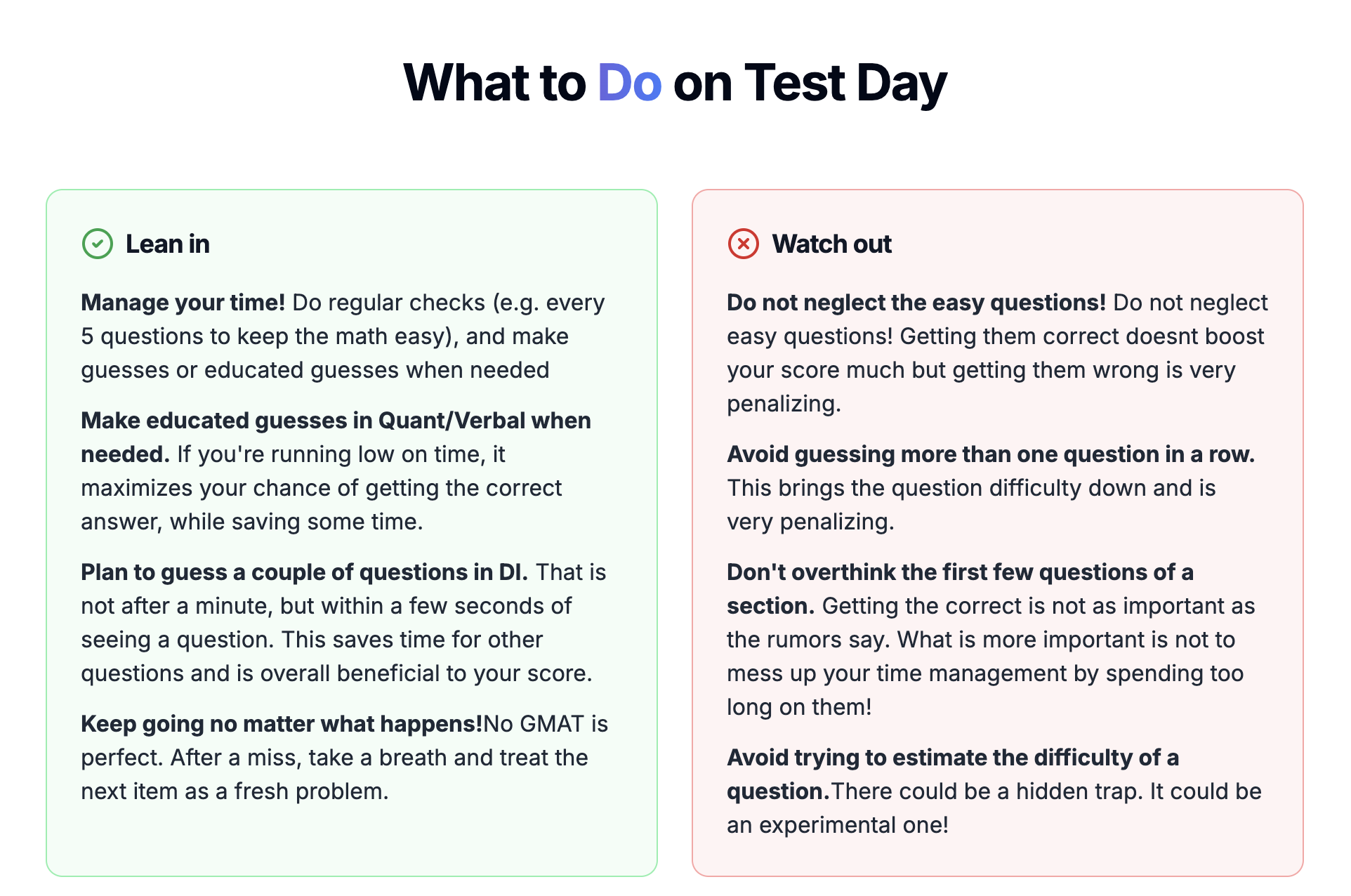
- Correct streaks push the question difficulty up and you score a lot of points on correct hard questions.
- Incorrect streaks (for example when guessing) push the question difficulty down and getting easy questions wrong is very penalizing.
Does not directly drive the score
- Experimental items (you cannot identify them; they are excluded from scoring).
- How fast you answer, by itself. There are no bonus points for answering a question quickly.
- Question order. Where you get your correct answers has an impact on subsequent question difficulty but does not directly affect your score.
Deep dive: section scores, percentiles, adaptive difficulty, unanswered questions, timing, and guessing. About a ten-minute read.
How to use this as an applicant
Above the reported mean or range
A score above the reported mean or range gives you more room for the rest of the file. It does not guarantee admission, but it usually means you can focus more on school fit, internships, academics, and application quality rather than on whether the test score is competitive enough.
Around the mean or middle of the range
If you are near the middle of the class profile, the score is probably viable and the rest of the application matters more. Focus on matching the degree type to your goals, showing clear quantitative readiness, and presenting a believable career story.
Below the middle 80% range
If your score sits clearly below the middle 80% range, a retake is often the cleanest way to improve your odds, especially for MiF and technical finance programs. You may also need to rebalance your list toward programs where your profile is competitive on more than just the test.
When to retake
Retake when your practice tests show a realistic path to a better score and your target deadlines still leave room to apply well. The strongest reason to retake is when a higher GMAT would move you from below-range to solidly competitive for your preferred category of program.
If you are preparing for the GMAT Focus, GMAT Panda offers structured, adaptive practice.
Start your free trialMore GMAT guides
- GMAT Focus Exam FAQ (format, scoring basics, and test-day questions)
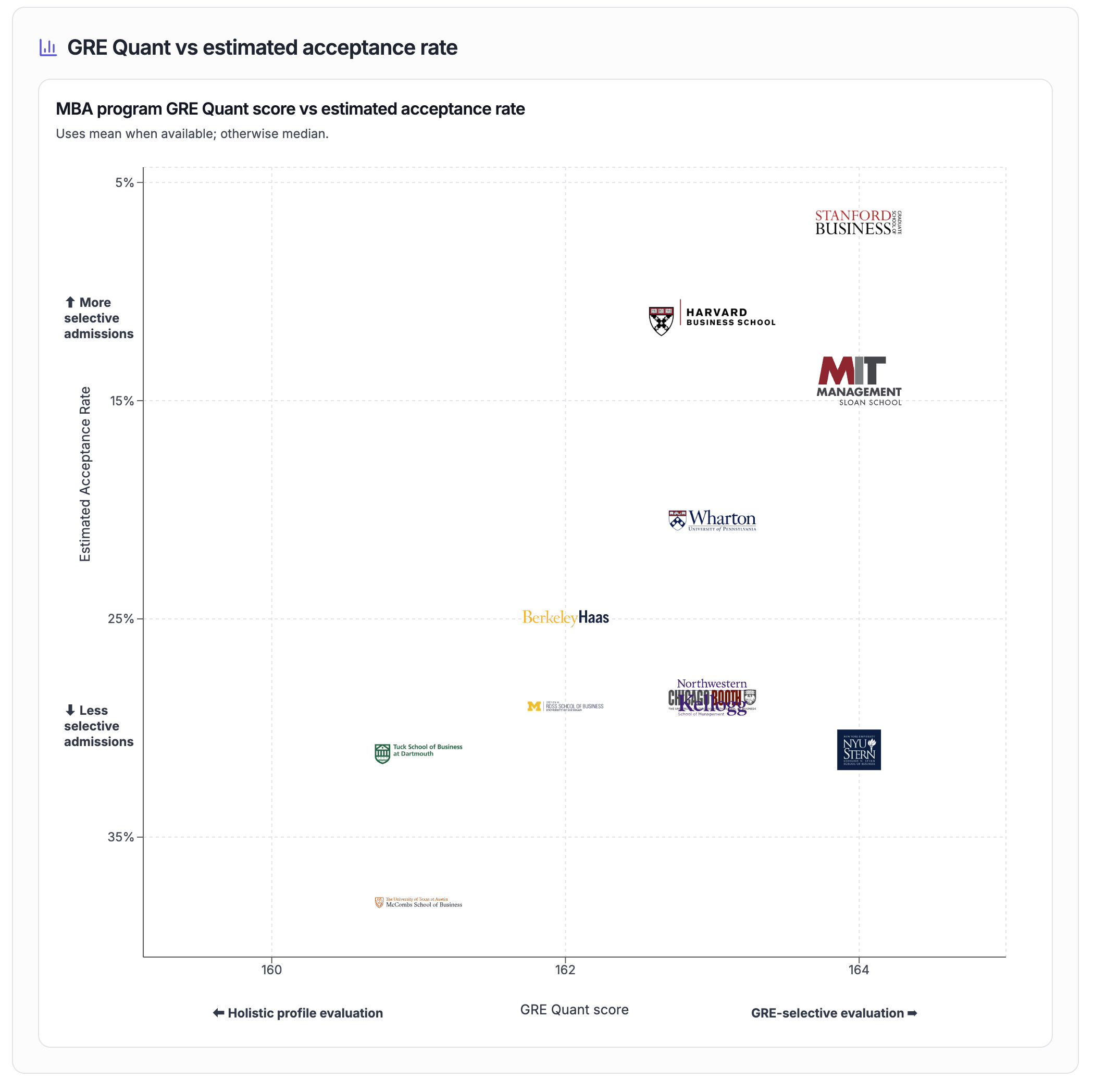
- GMAT vs GRE for MBA admissions (2026) (useful context on test choice)
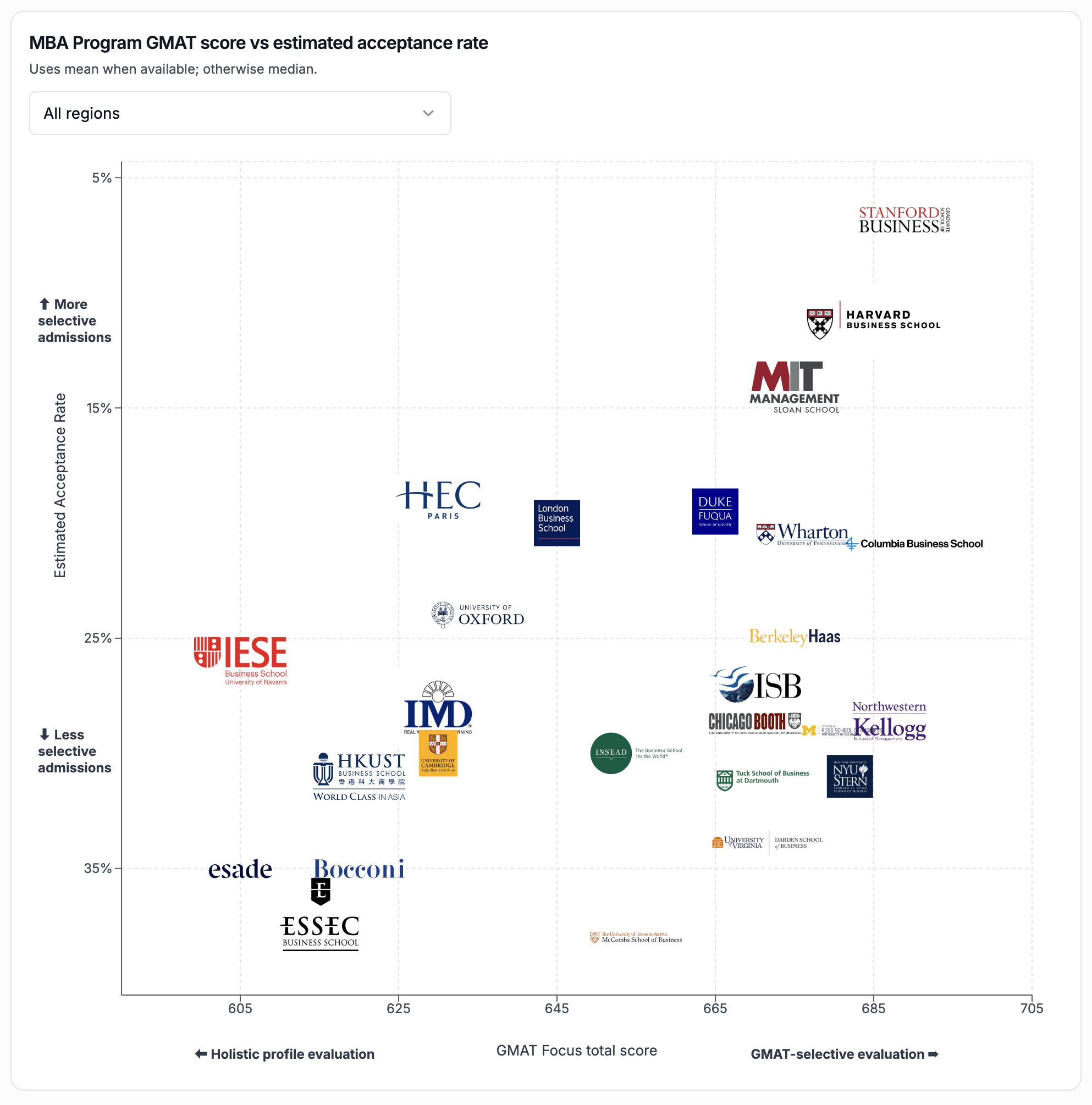
- GMAT Focus MBA score ranges vs acceptance rate (full-time MBA comparison tool)
- how GMAT scoring works (deep dive)
Frequently asked questions
Specialized masters cohorts are usually earlier-career and more degree-specific than MBA cohorts. Admissions teams often put more weight on academics, quantitative preparation, internships, and fit with the exact program style, whether that is MiM, MiF, or a US finance masters degree.
Related reading
Continue with these GMAT Panda articles.
Turn insight into prep progress
GMAT Panda helps you build the skills and recognition you need for test day with structured practice and explanations tied to real GMAT-style work.